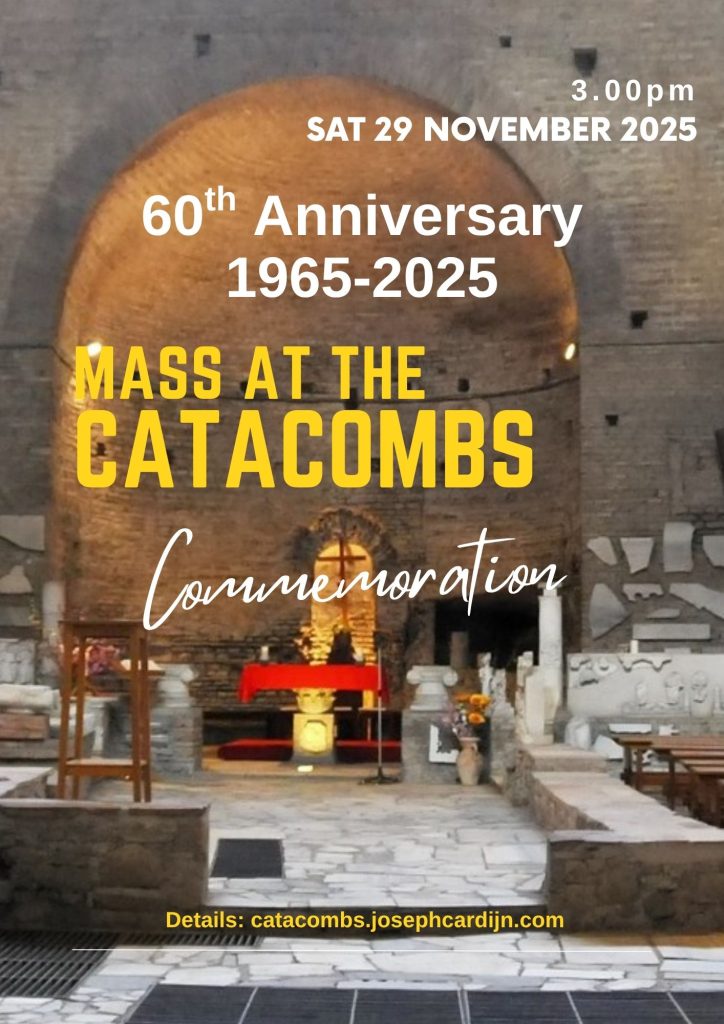
To mark the 60th anniversary of the Pact of the Catacombs, we held a special commemorative prayer service with the Dorothy Day pilgrimage group at the Domitilla Catacombs on Saturday 29 November 2025.
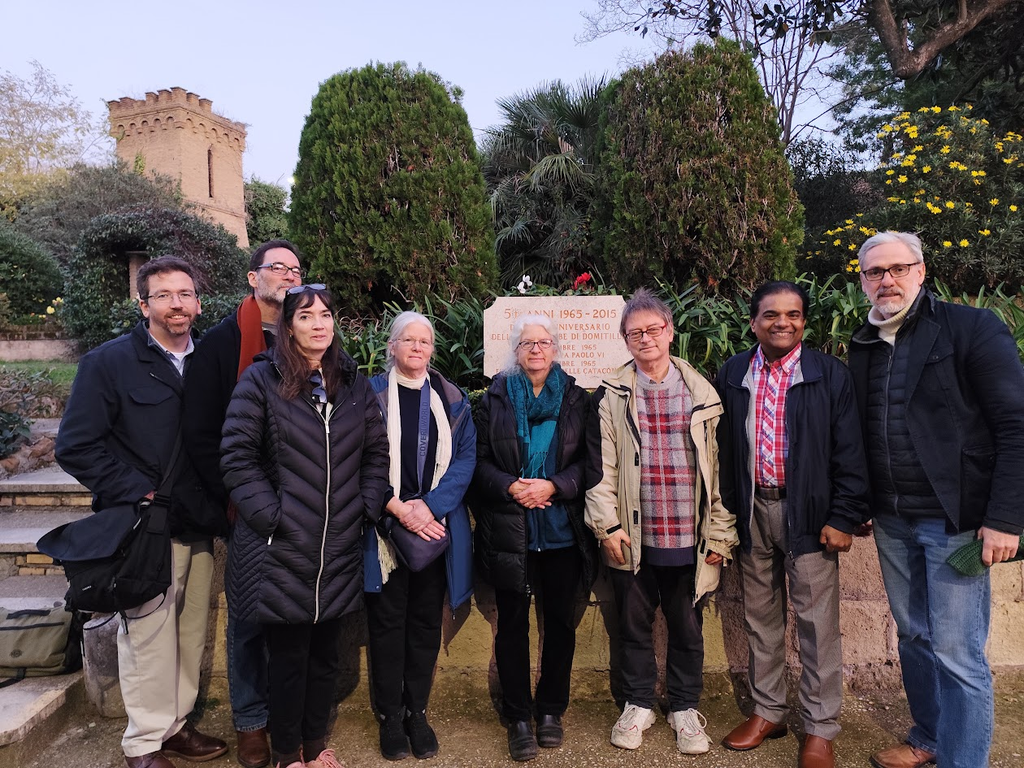
To mark the 60th anniversary of the Pact of the Catacombs, we held a special commemorative prayer service with the Dorothy Day pilgrimage group at the Domitilla Catacombs on Saturday 29 November 2025.
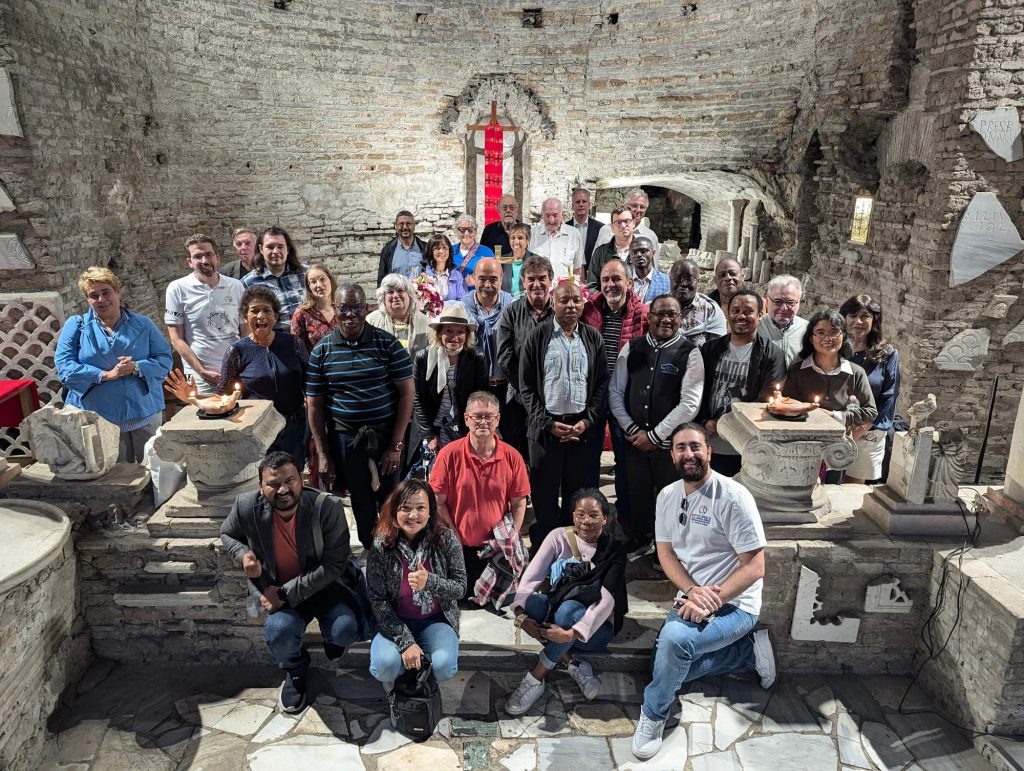
Participants at the Lay Mission and Vocation Conference held from 9-13 October 2024 celebrated Mass at the Domitilla Catacombs adopting a final declaration recalling the original Pact of the Catacombs.
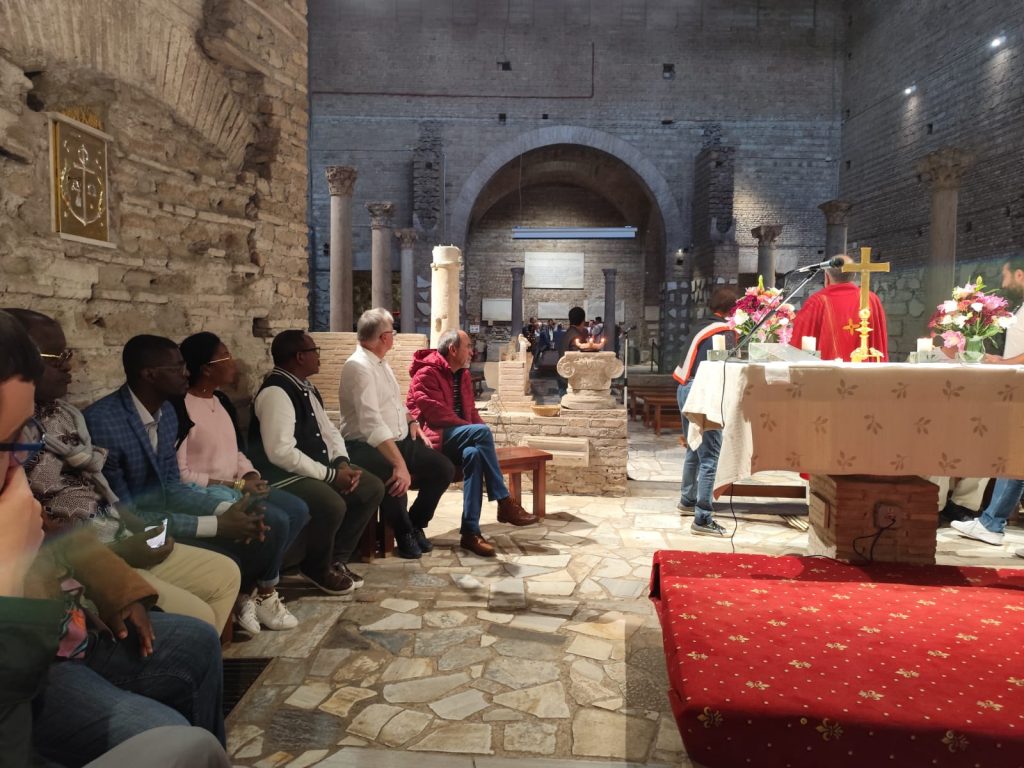
This was the final declaration of the participants in the Lay Mission and Vocation Conference held in Rome from 9-13 October 2024.
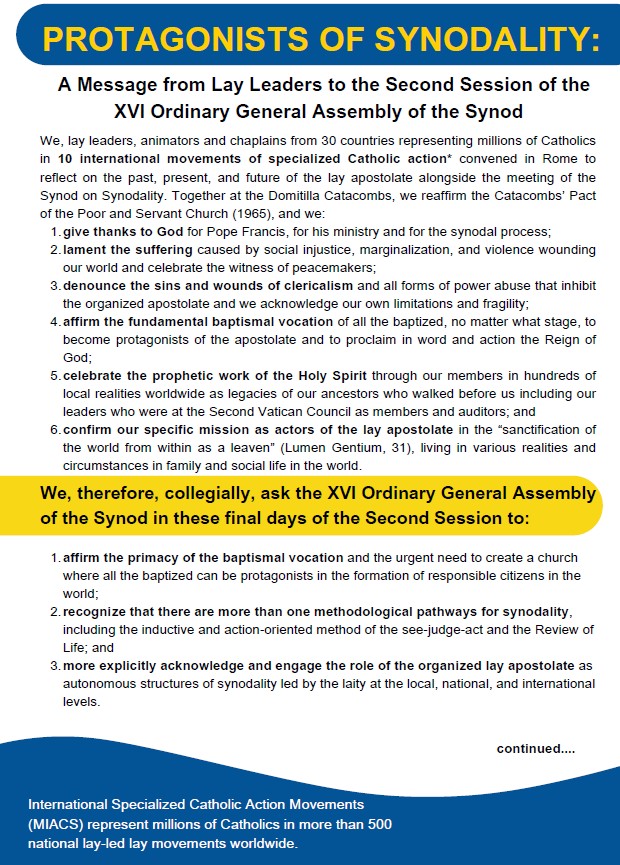
Protagonists of Synodality: A Message from Lay Leaders to the Second Session of the XVI Ordinary General Assembly of the Synod
We, lay leaders, animators and chaplains from 30 countries representing millions of Catholics in 10 international movements of specialized Catholic action convened in Rome to reflect on the past, present, and future of the lay apostolate alongside the meeting of the Synod on Synodality. Together at the
Domitilla Catacombs, we reaffirm the Catacombs’ Pact of the Poor and Servant Church (1965), and we:
We, therefore, collegially, ask the XVI Ordinary General Assembly of the Synod in these final days of the Second Session to:
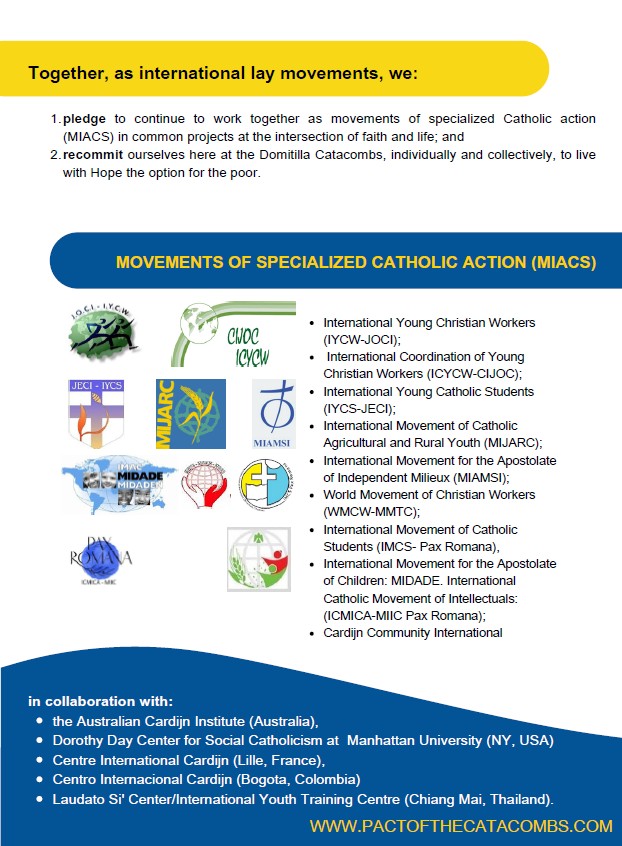
Together, as international lay movements, we:
Organizers included the International Young Christian Workers (IYCW-JOCI); International Coordination of Young Christian Workers (ICYCW-CIJOC); International Young Catholic Students (IYCS-JECI); International Movement of Catholic Agricultural and Rural Youth (MIJARC); International Movement for the Apostolate of Independent Milieux (MIAMSI); World Movement of Christian Workers (WMCW-MMTC); International Movement for the Apostolate of Children: MIDADE. International Catholic Movement of Intellectuals: (ICMICA-MIIC Pax Romana); International Movement of Catholic Students (IMCS-MIEC Pax Romana), the Australian Cardijn Institute (Australia), Dorothy Day Center (Manhattan University), Centre International Cardijn (Lille, France), Centro Internacional Cardijn (Bogota, Colombia), Laudato Si’ Center/International Youth Training Centre (Chiang Mai, Thailand), Cardijn Community International Africa (CCIA).
DOWNLOAD
Click here to download the Protagonists of Synodality Message
Join us for a mass at the Domitilla Catacombs on Saturday 21 October 2023 at 3pm.
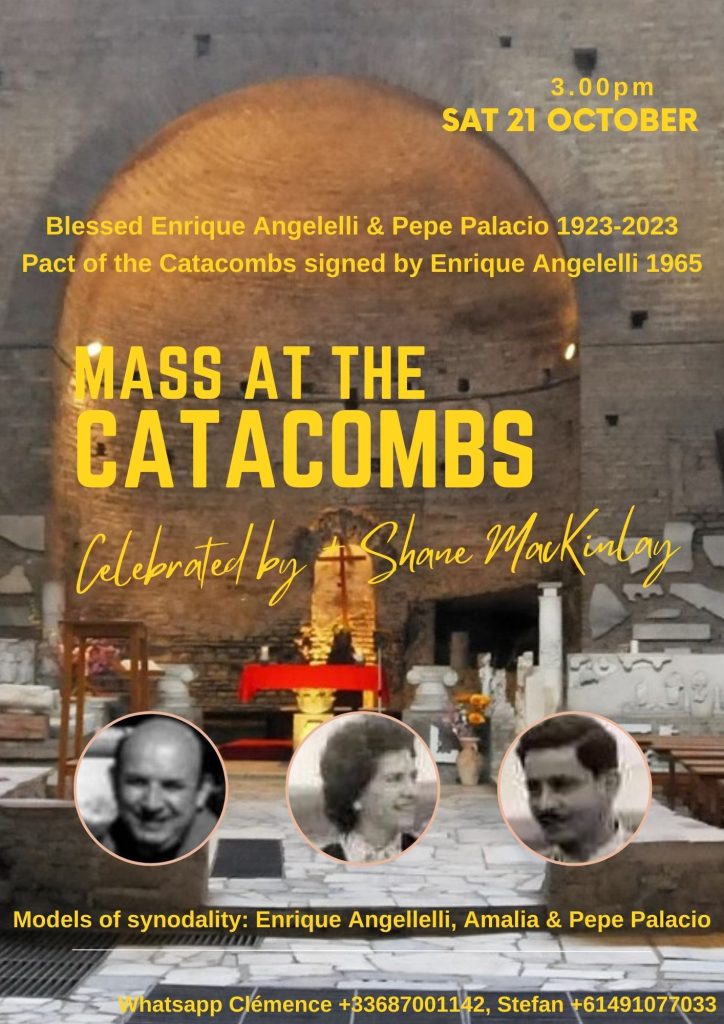
We will remember Blessed Enrique Angelelli and Pepe Palacio, who co-founded the YCW (JOC) in the Diocese of Cordoba. They were both born in 1923. And they were both killed by military, Pepe in December 1975, and +Enrique and his companions in August 1976.
Pepe Palacio
Pepe, a trade union leader, was active for many years with the YCW and also with the Christian Workers Movement. He had only recently been elected as the first lay collaborator (chaplain) of the International YCW and he had only recently returned to Argentina from Bogota, Colombia, where he took part in a Workers Meeting organised by the IYCW before he “disappeared.”
Amalia Castano de Palacio
In another kind of martyrdom, Amalia, Pepe’s wife was left to raise their family alone. She died without eve finding out what had happened to her husband. Years later after the end of the dictatorship, their son, Jose Luis, was able to confirm his death at the hands of the military from information in the national archives.
Enrique Angelelli
As well as being a YCW chaplain, Enrique Angelelli was also a chaplain to the students movement, the JUC. And as a bishop in La Rioja, he worked closely with leaders from the rural Specialised Catholic Action movements.
He was also an original signatory of the Pact of the Catacombs adopted by Vatican II bishops, who wished to commit themselves to the poor and to the poor. Their pact was inspired by Joseph Cardijn’s consecration to the working class in 1903.
Now, during the Synod on Synodality, we remember them as pioneers of a synodal partnership between laity and clergy, working together to build the Kingdom of God.
Mass @ The Catacombs
Welcome to join us in the Domitilla Catacombs at 6pm on Saturday 21 October. Please contact us via Whatsapp (see details below), by email: aci@australiancardijninstitute.org for more details, by QR code, or by clicking on button below.

This is the story of the Pact of the Catacombs for a Church of the Poor and its long forgotten counterpart, the Pietralata Message, for a worker Church.
The story begins with a proposal by Brazilian Archbishop Helder Camara to hold two Eucharistic celebrations towards the end of the Fourth Session of Vatican II in October or November 1965.
Camara explained the proposal in a letter to his Brazilian colleagues:
(It will be) a concelebration in Cardijn’s cardinal’s church involving twenty bishops from around the world (the difficulty will be to select them). All others will also be invited. A Mass specially dedicated to workers. Delegations from neighbouring countries will come. Workers from Rome will come. In the midst of the Mass, we will take a solemn oath, more concrete and binding than that of Cardijn. The minimum that we will promise will be to renounce our purple habits and the title of Excellency… After the mass, we will have coffee in confraternity with the working class.
Another concelebration (will be held) at St Mary’s at Trastevere, one of the poorest neighbourhoods in Rome… Twenty bishops from the whole world (again, the difficulty will be to choose them), perhaps around Cardinal Lercaro or Patriarch Maximos IV, who is the protector of the Group of the Poor, which is a little suspect in the eyes of the Holy Office. We will invite poor people from the neighbourhood…
Helder Camara, Lettres conciliaires, II, 802.
As it turned out, the two masses did take place on successive evenings on 16 and 17 November 1965, just prior to the promulgation of the Decree on Lay Apostolate, Apostolicam Actuositatem, on 18 November.
The original order of the masses, however, was reversed. The Mass for a Poor and Servant Church was held first, not at Trastevere, but in the Domitilla Catacombs. It was there that the document later to become known as the Pact of the Catacombs was adopted by the bishops present.
The Mass for Workers took place the following evening at Cardijn’s cardinal’s parish church of St Michael Archangel in the working class Rome suburb of Pietralata. There, the gathered bishops adopted a second document, the Pietralata Message.
Much has been written about the Pact of the Catacombs yet little is known of the Pietralata Message.
This website presents them both pairing them again in the way that Helder Camara had originally intended and hoped.
Stefan Gigacz


